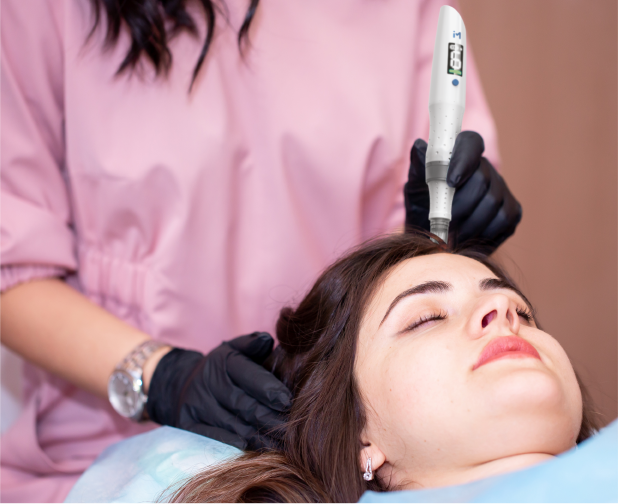
Alopecia can be genetic and appear gradually over time or be triggered by hormonal changes, improper nutrition, or stress at any age. Androgenic alopecia is the most common type of hair loss. It can affect both men and women, but it is clearly more common in men and shows different patterns according to sex. Male pattern baldness shows a recession of the hairline in the temples and increasing hair fall in the crown of the head. For female pattern baldness, it begins as homogeneous hair weakening, and increased shedding. However, as the problem evolves, both sexes present pronounced hair loss in the crown, and women’s hairline can also recede a little.
Main causes of hair loss
Hair loss occurs when new hair doesn’t replace the hair that has fallen out. It is typically related to one or more of the following factors:
Genetics
Some individuals may be genetically predisposed to hair loss as a hereditary condition that happens with ageing.
Hormonal changes and
medical conditions
A variety of conditions including hormonal changes due to pregnancy, childbirth, menopause, and thyroid problems can cause permanent or temporary hair loss.
Medications/Treatments
Hair loss can be a side effect of
certain drugs, such as those used for cancer, arthritis, depression, heart problems, gout, high blood pressure, etc. In the case of radiation therapy, the hair may not grow back the same way it was before.
Hairstyles/Treatments
Excessive styling or styles that pull your hair tight (like pigtails, cornrows, etc.) can cause a type of hair loss called traction alopecia. Hot oil and other treatments can also cause hair to fall out. If scarring occurs,hair loss could be permanent.
Stress
It is common for people to experience a general thinning of hair several months after a physical or emotional shock. This type of hair loss is temporary.
How can imedpen® x treat hair loss?
Microneedling, particularly when used in combination with PRP (Platelet-Rich Plasma) and/or mesotherapy, offers a multi-faceted approach to treating alopecia. The microinjuries created by imedpen® stimulates the release of growth factors and cytokines, which, when combined with concetrated PRP, promote vascularization to increase hair follicle size and volume, and stimulates hair growth. It also enhances angiogeneses, facilitating the development of a robust capillary network that nourishes hair follicles and delivers essential hormones for sustained hair health.