Rosacea is a chronic skin condition characterised by facial redness, visible blood vessels, swelling, and sometimes small, red, pus-filled bumps. It typically affects the central part of the face, including the cheeks, nose, chin, and forehead. Rosacea can vary in severity and come and go over time. While the exact cause of rosacea is unknown, factors such as genetics, environmental triggers, abnormal blood vessels, and inflammation are believed to play a role.
Common Signs of Rosacea
Rosacea can be triggered or aggravated by various factors, including sun exposure, hot or spicy foods, alcohol consumption, temperature extremes, stress, certain medications, and vigorous exercise. While there is no cure for rosacea, various treatments can help manage its symptoms and reduce flare-ups.
Persistent facial redness
This is often the earliest sign of
rosacea and can resemble a blush or
sunburn that does not go away.
Visible blood vessels
Small blood vessels on the nose and cheesk may become visible and appear spider-like (telangiectasia).
Swelling
Facial swelling, particularly around
the nose, may occur, giving the skin
a bumpy texture.
Acne-like bumps
Small, red, pus-filled bumps
(papules) or pimple-like bumps
(pustules) may develop, resembling
acne. These bumps are typically not
accompanied by blackheads or
whiteheads.
Eye irritation
In some cases, rosacea can affect the eyes, causing symptoms such as
dryness, itching, burning, and
sensitivity to light. This condition,
known as ocular rosacea, can lead
to complications if left untreated.
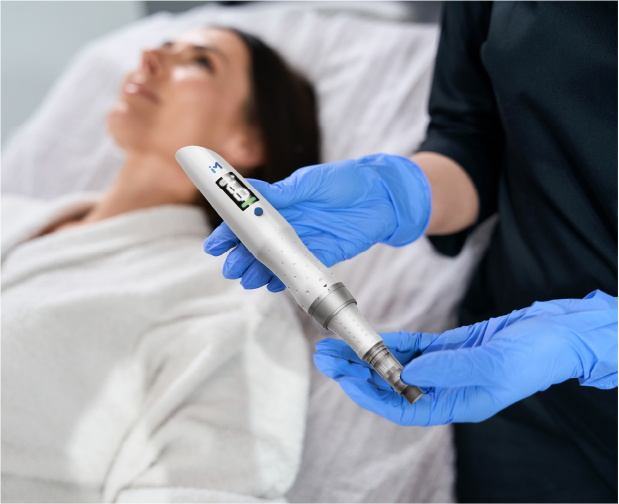
How can imedpen® x treat Rosacea?
While microneedling is not typically used as a primary treatment for rosacea, some studies and anecdotal evidence suggest that it may offer benefits for certain rosacea symptoms, particularly for improving skin texture and reducing the appearance of visible blood vessels.
6
SESSIONS
8
WEEK INTERVALS
imedpen® can help treat Rosacea by:
Stimulating Collagen
Microneedling promotes the production of collagen, a protein that helps maintain the skin’s structure and elasticity. By increasing collagen levels, imedpen® may help strengthen the skin barrier and improve its ability to tolerate triggers that exacerbate rosacea symptoms.
Reducing Redness
Some individuals with rosacea may experience improvement in facial redness after undergoing microneedling sessions. The controlled skin injury induced by microneedling can trigger a healing response that may help reduce redness overtime.
Improving Skin Texture
Microneedling can help smooth out uneven skin texture and reduce the appearance of acne-like bumps or pustules associated with rosacea. This may lead to a more even complexion and a reduction in the overall severity of rosacea symptoms.
Enhancing penetration of
topical ingredients
Microneedling creates microchannels in the skin, which can enhance the penetration and absorption of topical medications or serums used to treat rosacea. This can potentially improve the effectiveness of these treatments.